
Rare, medium-rare or medium: discover the differences between each level of meat doneness and the tips from Michelin-starred chef Hervé Paulus. In Marrakech, L'Ô à la Bouche reveals the essential techniques to preserve the tenderness, juiciness, and flavors of a fine cut.
In a fine dining restaurant in Marrakech, the enjoyment of an exceptional piece of meat is never left to chance. Its tenderness, aroma, juiciness, and internal temperature depend on a precise balance between the product, the cooking technique, and the chef's expertise. But how do you choose between rare, medium-rare, or medium meat?
With the guidance of chef Hervé Paulus, a former Michelin-starred chef, discover the key markers to better understand meat and how to cook it. Whether you are a tourist visiting Marrakech, a gastronomy enthusiast, or a business executive looking for a refined lunch or dinner, these insights will help you select a cooking level suited to your preferences and each cut.
Meat Cookery: A Precision That Transforms the Experience
Perfectly cooked meat should offer a pleasant texture, a delicately caramelized surface, and an interior that matches the diner's expectations. Undercooking can leave a piece cold or insufficiently seared; overcooking risks reducing its juiciness and toughening its fibers.
At a demanding establishment like L'Ô à la Bouche, cooking reflects a commitment to rigor and consistency. The quality of the meat is essential, but it is not enough: mastering the heat, the resting time, the thickness of the cut, and precision in technique make all the difference.
Why Is Cooking Crucial for Perfect Meat?
Cooking profoundly transforms meat. Under heat, muscle fibers gradually contract, juices concentrate, and aromas develop. The internal temperature directly influences texture and mouthfeel.
- Tenderness: controlled cooking preserves the suppleness of the cut and prevents it from becoming dry.
- Juiciness: excessive temperature causes a greater loss of natural juices.
- Texture: the contrast between a seared exterior and a tender interior creates a richer experience.
- Flavor: a beautiful brown crust brings grilled and lightly caramelized notes.
- Internal temperature: it ensures even cooking throughout, especially for thicker cuts.
Resting time is equally essential. After cooking, juices need to redistribute through the fibers. Carving the meat immediately can cause them to escape onto the plate and diminish the sensation of tenderness.
Rare, Medium-Rare, or Medium: What Are the Differences?
Rare Meat
Rare beef is seared quickly at very high heat. The interior remains red, sometimes appearing almost raw, with an indicative internal temperature around 45 to 48 °C. It is typically very tender and retains a sensation of freshness at its core.
This cooking method suits tender, thick cuts particularly well, such as filet or certain marbled beef cuts. It is ideal for those who appreciate a very supple texture and a distinctly pure beef flavor.
Medium-rare beef
Medium-rare beef reaches approximately 50 to 54 °C internally. The interior remains red, but it is warm and more uniform than rare beef. The texture stays tender and the meat retains most of its juices.
For many gastronomes, this is an excellent balance between aromatic intensity, tenderness, and warmth. A rib-eye or strip steak is often particularly enjoyable cooked medium-rare, depending on the quality of the cut and the guest's preferences.
Medium beef
Medium beef has a pink center and typically reaches 58 to 62 °C. Its texture is firmer, though it can remain juicy when cooked with precision. This option suits those who prefer a more cooked meat without entirely forgoing its tenderness.
These temperatures remain indicative. They may vary slightly depending on the thickness of the cut, its weight, its aging, the intensity of the heat, and the resting time.
How to choose the right cooking level for each cut?
There is no single ideal cooking method for all meats. The choice depends primarily on the cut. Tender, marbled cuts such as filet, rib-eye, or strip steak generally handle rare or medium-rare cooking very well. Marbling—the presence of fine fat infiltrations—contributes to adding flavor and tenderness during cooking.
A leaner cut can be appreciated at medium if this cooking is conducted with precision. Its thickness also plays a major role: a thin cut reaches its core temperature quickly, while a thick piece allows you to sear the exterior while keeping the interior less cooked.
Aging also influences the palate experience. Aged beef develops more intense aromas and can present a particularly melt-in-your-mouth texture. The best advice remains to consult with the professional preparing it in order to adapt the cooking method to the cut and to the guest's preferences.
Chef Hervé Paulus's tips for mastering the cook
Chef Hervé Paulus insists on precision in technique. Above all, it is recommended to remove the meat from the refrigerator shortly before cooking to minimize thermal shock. The timing depends on thickness and ambient temperature, but meat should not remain at room temperature for too long.
- Properly preheat the pan, plancha or grill before placing the meat.
- Sear the cut on a well-heated surface to achieve even coloring.
- Avoid unnecessary handling and resist the urge to turn it constantly.
- Use a probe when the thickness of the cut makes evaluation difficult.
- Anticipate carryover cooking: the temperature often continues to rise slightly after the heat is removed.
- Allow the meat to rest for a few minutes before slicing and serving.
This method may seem simple, but it demands great consistency. It is this attention to detail that allows us to achieve precise cooking, service after service.
Common mistakes that can ruin a fine cut of meat
An insufficiently hot pan prevents the formation of a proper crust and causes loss of juices. The solution is to ensure the cooking surface is truly at temperature before adding the meat.
Piercing the cut with a fork is also discouraged: this creates openings through which juices can escape. It is better to use tongs or a spatula. Turning the meat too often also prevents even coloring.
Thickness must also be considered. A thin cut requires different handling than a thick ribeye. Finally, mistaking a well-colored surface for successful internal cooking can result in meat that is too rare or overdone. Coloring is important, but only internal temperature truly determines the result.
How to assess doneness without cutting into the meat?
Instant-read thermometer
A probe is the most reliable method for consistent results. It should be inserted into the center of the thickest part, without touching the bone. It allows you to target approximately 45 to 48 °C for rare, 50 to 54 °C for medium-rare and 58 to 62 °C for medium.
Time as a guide
Cooking time can serve as a reference, but it depends on many factors: thickness, initial temperature, heat intensity and pan type. It is therefore less precise than measuring internal temperature.
The touch test
With experience, a cook can assess doneness by feel. Rare meat is very supple, medium-rare offers slight resistance and medium meat feels firmer. This method requires practice, however, and does not always replace the probe.
Seasoning, Sauce and Garnish: Creating a Culinary Harmony
Seasoning should enhance the meat without overshadowing its quality. Salt may be added before or after cooking depending on the technique employed and the chef's preferences. Pepper is often added toward the end of cooking to preserve its aromas and prevent it from burning on an overly hot surface.
French culinary sauces elegantly accompany meat: reduced jus, pepper sauce, béarnaise or wine sauce. The choice depends on the cut and its aromatic intensity. A seasonal vegetable garnish, a silky purée, carefully prepared potatoes or fresh salad can bring balance and contrast without diverting attention from the product itself.
The Excellence of a Michelin-Starred Chef Serving Fine Dining in Marrakech
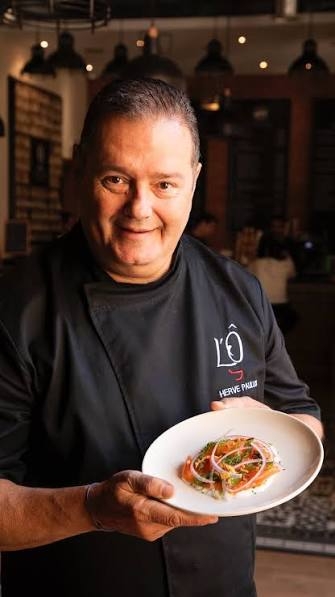
Chef Hervé Paulus is deeply rooted in Lorraine, his native region. He trained in Alsace and began his career in Michelin-starred restaurants in Colmar. In 1986, he took over the kitchens at Ancienne Forge in Hagenthal-le-Haut, where he earned his first Michelin star in 1994. He later received recognition for his Hostellerie Paulus in Landser.
His career has been marked by numerous competitions and accolades, as well as appearances alongside Joël Robuchon. In 2013, he chose to establish himself in Marrakech. After several ventures in the city's acclaimed establishments, he founded L'Ô à la Bouche in 2019 with his partners Denis and Philippe, in the heart of Guéliz, near the Medina.
These principles are reflected in the restaurant's values: excellence, rigor, consistency, an elegant setting and quality service. Each plate aims to deliver a refined experience, whether for passing visitors or seasoned gastronomy enthusiasts in Marrakech.
Where to Enjoy Perfectly Cooked Meat in Marrakech?
For a fine dining restaurant in Guéliz, L'Ô à la Bouche offers an elegant and approachable destination, perfect for a business lunch, an intimate dinner or a gastronomic retreat during your stay. Its French cuisine in Morocco is expressed through generous, precise plates crafted to honor the quality of the ingredients.
The restaurant also offers a three-course lunch, including starter, main and dessert for 190 dirhams. An excellent option to experience the quality of the house during a lunch in Marrakech. To plan your visit, consult the restaurant's menu or visit the practical information page.
Whether you're looking for where to eat in Marrakech after exploring the Medina or seeking a refined dinner venue in Marrakech, L'Ô à la Bouche is a natural choice among the must-discover addresses in Guéliz.
FAQ on Meat Cooking
Which cooking method retains the most juices?
Rare or medium-rare cooking generally retains more juices, provided the cut is of high quality and rests after cooking. Temperature control remains essential.
What temperature corresponds to medium-rare meat?
Medium-rare meat reaches approximately 50 to 54 °C at the center. This may vary slightly depending on the thickness of the cut and residual cooking.
Should you remove meat from the refrigerator before cooking?
Yes, it's best to take it out in advance to minimize thermal shock. However, it should not remain at room temperature for too long.
How long should meat rest?
A few minutes are usually sufficient. The thicker the cut, the longer the resting period can be. This step allows the juices to distribute evenly through the fibers.
What cooking level to choose for a ribeye or filet?
A parsley-crusted ribeye is often enjoyed medium-rare, while a filet may suit rare or medium-rare cooking. The final choice always depends on the guest's preference and the cut's characteristics.
Conclusion: The ideal cooking depends on the cut and the guest
Rare, medium-rare, or medium, each cooking level has its own character. Rare meat offers suppleness and a fresh center, medium-rare provides a balance between heat, juiciness and tenderness, while medium cooking offers a firmer texture and a pink center.
The ideal cooking is a harmony between the cut, technique and individual preferences. At L'Ô à la Bouche, the precision, rigor and consistency of Chef Hervé Paulus transform a beautiful piece of meat into a genuine gastronomic experience. To enjoy this experience at your next lunch or dinner in Marrakech, book your table now.